—
LUMEN
GLASS ART
Preferences
Language
Currency
BEHIND THE ART
Where Nature and Glass Become One
Nature is more than a source of inspiration; it is one of the defining forces behind the creative process. In Anita Darabos's wood-and-glass composite art, organic and geometric forms, natural and manufactured materials come together in an extraordinary unity. The result is an artistic world in which forms left behind by nature are given new life.
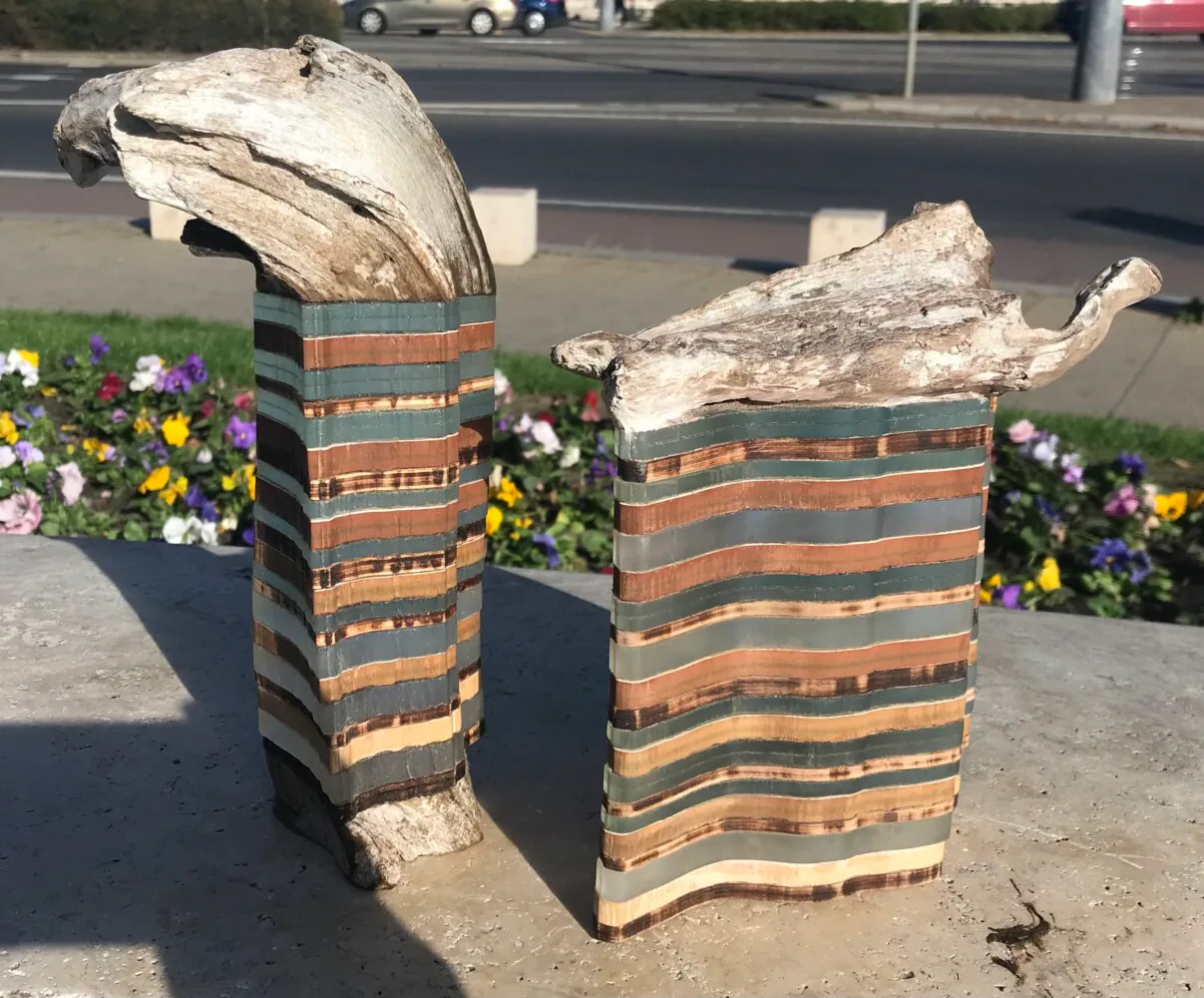
From Nature's Logic to Independent Works of Art
The theoretical foundations of Anita Darabos's wood-and-glass composite approach originate in the study of natural structures and construction methods. One particularly distinctive source of inspiration is the caddisfly larva, which builds a protective case using small organic and inorganic materials found in its surroundings. This natural method of combining different materials offered the artist a new creative perspective. Drawing on the principles of bionics, she does not simply imitate forms found in nature, but reinterprets the underlying logic of their construction. The academic and artistic foundations of her practice are also connected to her DLA dissertation, “Plant Architecture – Glass in Architecture, Architectural Glass,” defended at the Breuer Marcell Doctoral School of the University of Pécs.
At first glance, wood and glass seem to belong to opposing worlds. Wood is warm, fibrous, and organic, its cracks, grain patterns, and irregular contours preserving traces of nature and time. Glass, by contrast, is hard, light-transmitting, and deliberately shaped, bringing color, transparency, and a new visual dimension to the composition. Yet in Anita Darabos's work, neither material serves merely as an accessory to the other. Naturally formed wood and geometrically composed glass become equally important elements of a unified sculptural structure. The interaction of light, transparency, color, and natural texture creates a distinctive balance of tension and harmony, making every artwork truly unrepeatable.
For Anita Darabos, recycling is not merely an environmentally conscious choice, but an artistic philosophy. In a spirit connected to Neo-Dada, she brings materials that have lost their original purpose into the realm of art: found wood, previously used porcelain, ceramics, and other discarded elements. Rather than disappearing, these materials acquire new meaning. This way of thinking extends beyond independent sculpture into applied design. In Vezva, a collaborative project with Vivien Botz, the wood-and-glass composite approach is also explored through furniture, room dividers, and architectural interior elements. Across these different applications, the underlying idea remains the same: recognizing the possibilities within materials, respecting nature, and embracing the art of renewal.
“I live on an imaginary island, creating and recycling from the materials around me. There is no end, only rebirth. An eternal cycle.” — Anita Darabos
Artistic and technical milestones
—
Natural structures, particularly the caddisfly larva's use of materials and construction principles, provide an important source of inspiration for the wood-and-glass composite approach.
2016
Doctoral Artistic Research
DLA degree at the Breuer Marcell Doctoral School, University of Pécs. Her dissertation, “Plant Architecture – Glass in Architecture, Architectural Glass,” explores the relationship between nature, architecture, and glass.
2020
The Art of Recycling
An artistic project supported by the Hungarian National Cultural Fund, exploring the creative reuse of glass, porcelain, ceramics, and wood.
2022
Habilitation
A further academic and artistic milestone at the University of Pécs.
Vezva — New Applications of the Artistic Approach
A collaborative project by Anita Darabos and Vivien Botz, extending the wood-and-glass composite concept into furniture and interior design.